building a data computer room in germany must not only meet technical needs, but also comply with local regulations and international standards. this article explains the key points one by one, from site selection, architectural design, power supply and cooling, network interconnection, security monitoring to disaster recovery planning, to help project teams find a balance between compliance and performance.
the construction of computer rooms should comply with relevant german and eu regulations, including construction, fire protection, energy efficiency and information security. common reference standards include the din series, bsi guidelines, and iso/iec information security management specifications. in addition, the data protection requirements of gdpr need to be taken into account, and compliance assessment and audit plans should be included from the beginning of the project.
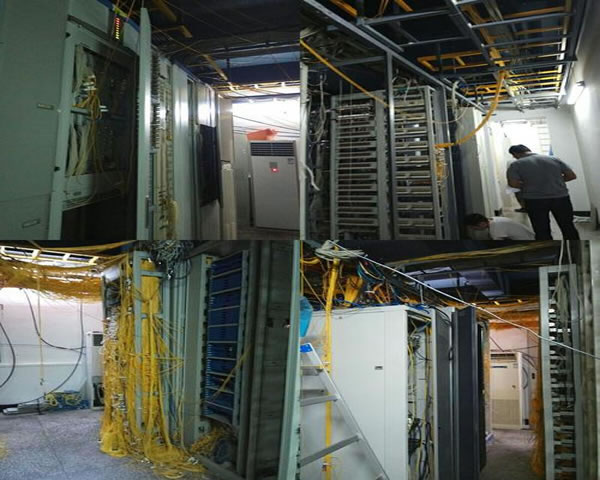
site selection requires a multi-dimensional risk assessment such as floods, earthquakes, industrial risks, and power stability, while also considering the distance from major internet exchange points and transmission trunk lines. prioritize locations with accessible power and fiber redundancy, and evaluate operating costs, taxes and local planning restrictions to ensure long-term availability and low-latency interconnection.
building design needs to take into account physical security and maintenance convenience, including fire zoning, fire resistance ratings, controlled access, load-bearing floors and machine room layout. the computer room should have a clear separation between the equipment area and the operating area, appropriate moisture-proof and dust-proof measures, and an infrastructure design that facilitates cooling and wiring to meet long-term expansion needs.
a robust power supply system is the core of the reliability of the computer room. it usually uses a combination of dual mains input, ups and diesel generators, and designs n+1 or 2n redundancy as required. power distribution, grounding, switching devices and fuel protection schemes need to be consistent with local regulations, with monitoring and regular testing procedures in place to verify availability.
cooling options should be selected based on equipment density and energy efficiency goals, such as inter-row cooling, in-rack cooling, or hot/cold aisle rectification. germany emphasizes energy conservation and waste heat recovery. free cooling sources, variable frequency control and heat recovery systems can be used to reduce pue and meet local energy efficiency regulations and environmental protection requirements.
network design needs to ensure transmission redundancy and diversified paths, and support multi-operator access and cross-connections. proximity to internet exchange points and carrier clusters such as frankfurt reduces latency and costs. at the same time, plan network segmentation and ddos protection, and combine physical isolation and logical partitioning to improve availability and security.
physical security adopts hierarchical access control, 24/7 video surveillance, intrusion detection and personnel background checks; information security requires cooperation with bms, log management and compliance auditing. integrate physical and network monitoring systems, establish alarm response and emergency procedures, and conduct regular drills to ensure that incidents can be quickly located and handled.
disaster recovery design includes multi-site backup, off-site real-time or near-real-time replication, and clear rto/rpo goals and recovery processes. it is recommended to adopt a geographically dispersed multi-active or cold/hot standby strategy, and conduct regular recovery drills and capacity verification to ensure that services can be restored as expected in the event of unexpected power outages, link interruptions or natural disasters.
building a data computer room in germany requires comprehensive planning from site selection, compliance, infrastructure to disaster recovery, prioritizing risk and needs assessment and citing din/bsi/iso and other standards. it is recommended to communicate with local regulatory and operating partners early, adopt a modular scalable design, and take energy efficiency and maintainability as long-term goals to achieve reliable and compliant computer room operations.
- Latest articles
- Full Process Guide For Purchasing And Performance Optimization Of VPS With Japanese Native IP
- An Explanation Of Vietnam’s Native Residential IP Pool Management And IP Rotation Strategies From The Perspective Of A Service Provider
- When Selecting Locations For Cloud Service Implementation, Consider Network Latency And Bandwidth Conditions In Computer Rooms In India And Germany.
- How To Buy A US VPS With Bitcoin While Protecting Anonymity And Compliance Risks
- Vps Cambodia Connection Domestic Access Speed Optimization And Node Selection Suggestions
- Main Points Of Fault Recovery And Multi-line Redundancy Design Of Hong Kong Telecom’s Direct-connected Computer Room
- Malaysia Vps Recommends Unlocking The Best Node And Configuration Guide For TikTok
- Step-by-step Implementation Of Korean Server And Chinese Email And Log Localization Settings
- Jay Chou Hong Kong Station Group Chat Group Commercial Cooperation Model And Brand Implantation Practical Cases
- Enterprise-level Purchasing Guide Which Brand Of Cn2 Is Good In Hong Kong? Service Stability And SLA Analysis
- Popular tags
-

Analysis Of Technical Details In Earthquake Resistance And Moisture Resistance At The German Meilou Flooring Shanghai Data Center
This article analyzes the technical details of German Merlo flooring in its Shanghai server room for earthquake resistance and moisture resistance from the perspectives of materials, support systems, installation processes, and acceptance, providing actionable operation and maintenance recommendations and key adaptation points. -

How Businesses Can Benefit From German Server Hosting
this article explores how businesses can benefit from german server hosting, including advantages in data security, network stability, and compliance. -

Tips On How To Smoothly Access Hong Kong Servers Through German Nodes
this article introduces tips on how to successfully access hong kong servers through german nodes, helping users improve the stability and speed of network connections.